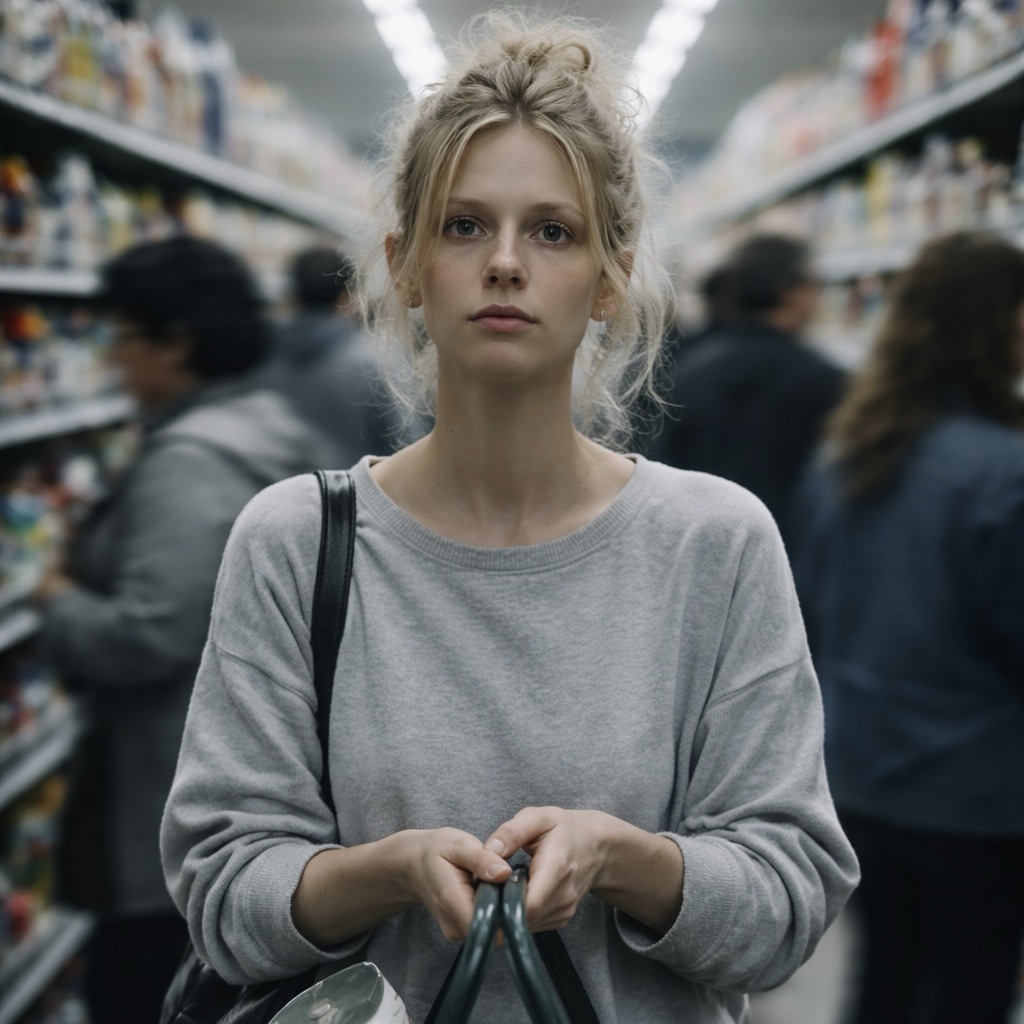
Why a simple visit to the store can mean sensory and social overload – and how you can deal with it.
Światło, dźwięk, zapach.
Koszyk pełen bodźców —
paragon za ciszę.
The store as a space full of stimuli
Bright light, often fluorescent, as well as music and sound advertisements. A moving crowd of people and the associated conversations, laughter, arguments and crying of children. The creaking of carts, beeps and verbal messages from the cash registers. The smell of food, cleaning products, household chemicals. Perfumes and people's sweat, and some rarely wash... The shelves with goods stretch for a long time, from the floor up, they are tightly filled with various products. People take them in their hands, turn them in their hands, shake them, the packaging rustles, sometimes the contents clatter. In addition, the staff can often change the arrangement of goods, move them to other places, change their location in the store. These are marketing strategies. Such a situation can confuse and force you to annoyingly search for various things that are needed, and so far have been in a specific place. What's worse: shopping is associated with decision-making, it's not always a favorite activity of Autistic people.
Sensory and social overload
Sensory overload can be very overwhelming. And then it is sometimes difficult for An autistic person to maintain full control over their reactions and behavior. On top of that, there is social overload, i.e. surprising situations, close physical contact in a crowd, or unexpected interactions with other people: the need to ask for help, chat, etc.
Every sensory profile is different
The problem associated with being in such places is an individual matter. Everyone has their own difficulties, some more visual, others auditory, or olfactory, or others. For some, the most difficult thing is contact with other people. And a large number of people on the autism spectrum have all these problems at once.
Strategies for dealing with shopping
Therefore, many Autistic people avoid going to shopping malls, hypermarkets or large stores. In some places, the so-called "quiet hours" are introduced. They are aimed at limiting sensory stimuli (primarily auditory and visual stimuli – reduced lighting), which is conducive to neurodivergent people and those who need calmer conditions in general. However, these hours are not always available to everyone. There are few of them during the week, or at times that may not suit many people, especially those who work professionally. People on the autism spectrum therefore try to shop online whenever possible, but such an option can be more expensive. When they have to go to larger stores, headphones, preferably with a mute function, or earplugs come in handy in such situations. Pomagathere are also sunglasses. In addition, sensory toys calm down and reduce tension.

Dodaj komentarz